


BIOPI
Bioartificial pancreas for the treatment of type 1 diabetes

Benefits
- Preserve the viability of the islet transplant
- Ensure oxygenation of the islets
- Prevent inflammation of the device
- Treat diabetes
Key words
- Type 1 diabetes
- Implantable medical device
- Islet transplantation
- Immuno-isolation
Intellectual Property
- 2 patents
- 1 knowhow
Laboratory
- TIMC-IMAG
Institutions
- CNRS
- GRENOBLE INP-UGA
- UGA
Linksium Continuum
- Maturation
- Incubation
Context
Patients with unstable type 1 diabetes experience severe and unpredictable blood glucose fluctuations throughout the day, even with optimized insulin therapy. These patients may be eligible for pancreatic islet transplantation, a promising therapeutic option. However, the clinical application of this approach remains limited by several major challenges. Insufficient oxygen supply to transplanted islets leads to poor graft survival, the requirement for lifelong immunosuppressive therapy significantly impacts patients’ quality of life, and donor organ scarcity further restricts its use. Moreover, this strategy remains a temporary solution rather than a definitive treatment.
Technology
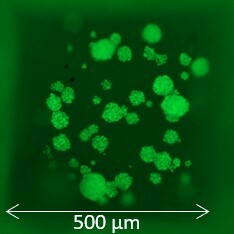
BIOPI is developing an implantable bioartificial pancreas designed to regulate blood glucose levels in patients with type 1 diabetes. The device is based on an implantable bioreactor that contains pancreatic islets within a 3D structure engineered to ensure efficient delivery of oxygen and nutrients. The matrix has demonstrated stability and biocompatibility, providing immune isolation while preventing biofouling and inflammatory reactions at the implant site.
Advantages
The bioreactor solves the major limitations of current islet transplantation strategies by enhancing islet viability through controlled oxygen delivery and providing immune protection without the need for immunosuppressive drugs. It also reduces inflammatory responses at the implant site. This technology aims to achieve durable insulin independence and improve the quality of life of patients with type 1 diabetes.
State of progress
The project is currently in the maturation phase. In vitro validation studies have demonstrated the functionality and viability of pancreatic islets within the bioreactor. The next objective of the maturation phase is to conduct preclinical evaluation in diabetic rat models.
Applications
Treatment of type 1 diabetes.